
Blacksmith Master Mining Guide: Ore, Stamina, and Gem Economics
How mining works in Blacksmith Master: mine unlocks, miner stamina shifts, pickaxe production, and how the Master Miner turns mining into a gem source in 1.0.
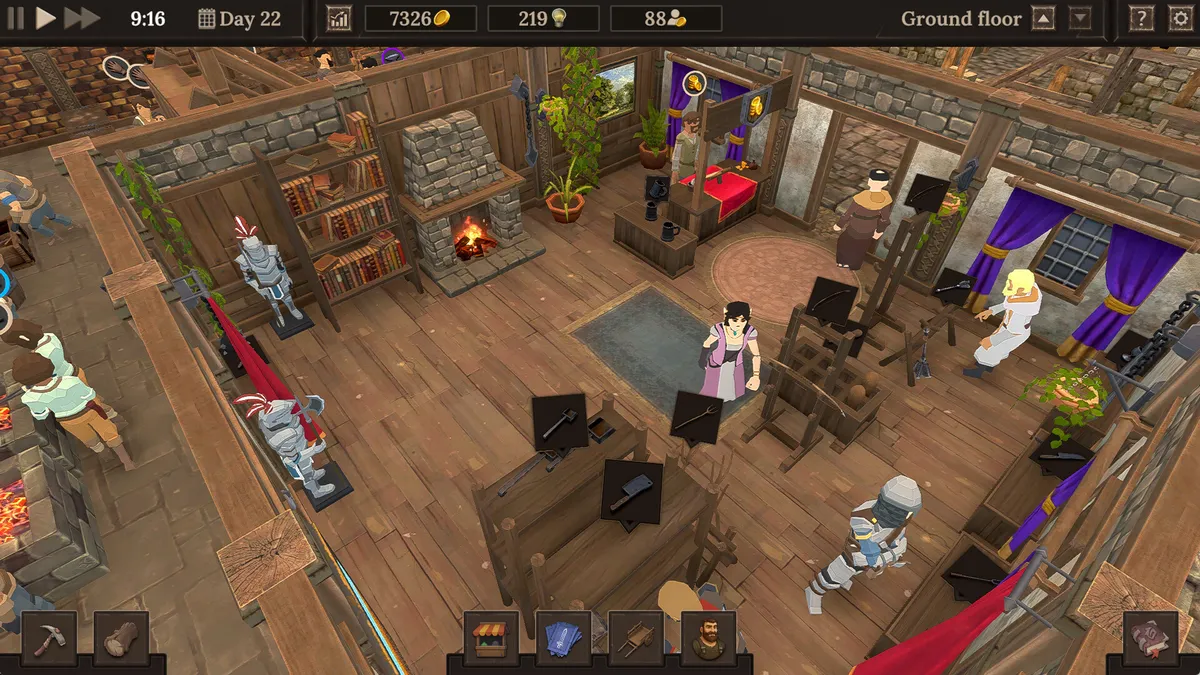
How does mining work in Blacksmith Master?
Mining opens through mastery nodes: Iron Mine (200 points), then Copper and Silver Mines deeper in the tree. Miners are hired like any worker and work the vein in stamina-limited shifts — when stamina runs out, they rest, and the day’s ore appears in the warehouse beside your shop next morning. An assistant assigned to restocking carries it inside; otherwise your blacksmiths do it and lose crafting time. The smelting side of this loop is covered in the smelting guide.
The stamina economy
A miner’s shift length is set by stamina, so +10 stamina traits — mediocre on crafters — are premium on gatherers, and a tired miner is a wage with no output. The practical rule: count your smelters’ daily ore appetite and hire roughly that many miners. Idle miners are pure loss; understaffed mines just under-deliver, which the restock button can patch for a day. If ore piles up in the warehouse, you have one miner too many.
Which mines first?
Follow your blueprint book, not the tree’s order:
- Iron Mine — the backbone metal for weapons and tools; open it the moment it is affordable.
- Copper Mine — mid-tier goods and the Gold Mine trade route both lean on copper items.
- Silver Mine — jewelry-grade; open when sterling silver items enter your production plan.
The trade routes guide explains why gold comes from barter, not a pickaxe: the Gold Mine route ships ore in exchange for finished goods.
Gems: from lucky finds to a supply line
Gems — topaz, emerald, ruby, diamond — are jewelry’s rare inputs. In version 1.0 the Master Miner finds gems while mining, turning a daily chore into a trickle of your most valuable materials; without him, gem supply depends on the Gem Mine trade route, which trades pickaxes and shovels for topaz first and better gems at higher route levels (6 diamonds per max-level shipment). Our gem sourcing page lists every gem and its route level.
Mining mistakes that cost real gold
- Over-hiring miners. Wages are daily; ore needs are not. Staff to smelter demand.
- No restock assistant. Blacksmiths carrying ore are blacksmiths not crafting — the worker builds guide shows the assignment fix.
- Selling ore in a pinch. Ore is a production input with compounding value; gold from a cancelled merchant offer is not.
- Ignoring the Master Miner. Among the six 1.0 masters, he is the only one who feeds the highest-margin catalog in the game (all six ranked).
The supply-line checklist
Mines covered by stamina-traits miners, warehouse-to-smelter restock assigned to an assistant, smelters pinned to your two most-used metals, and the Gem Mine route climbing toward ruby access. That loop takes you from raw rock to the 600-800 gold jewelry pieces in the jewelry tables — the most profitable items per worker-hour in Blacksmith Master.
Related Articles
guides
Blacksmith Master Smelting Guide: Every Ingot Chain Explained
The full Blacksmith Master smelting chain for 1.0: iron, copper, silver, and gold ingots in three sizes, and which metals to mine versus buy.
guides
Blacksmith Master Trade Routes: All Four Ranked by Return on Investment
All four Blacksmith Master trade routes compared: what each trades, unlock costs, shipments, and the best order for clay, wood, gold, and gems.
systems
Blacksmith Master Gems: How to Get Topaz, Emerald, Ruby, and Diamond
Every way to get gems in Blacksmith Master 1.0: the Gem Mine trade route shipments, Master Miner finds, and which jewelry each gem unlocks.
Was this helpful?
Thanks for the feedback!